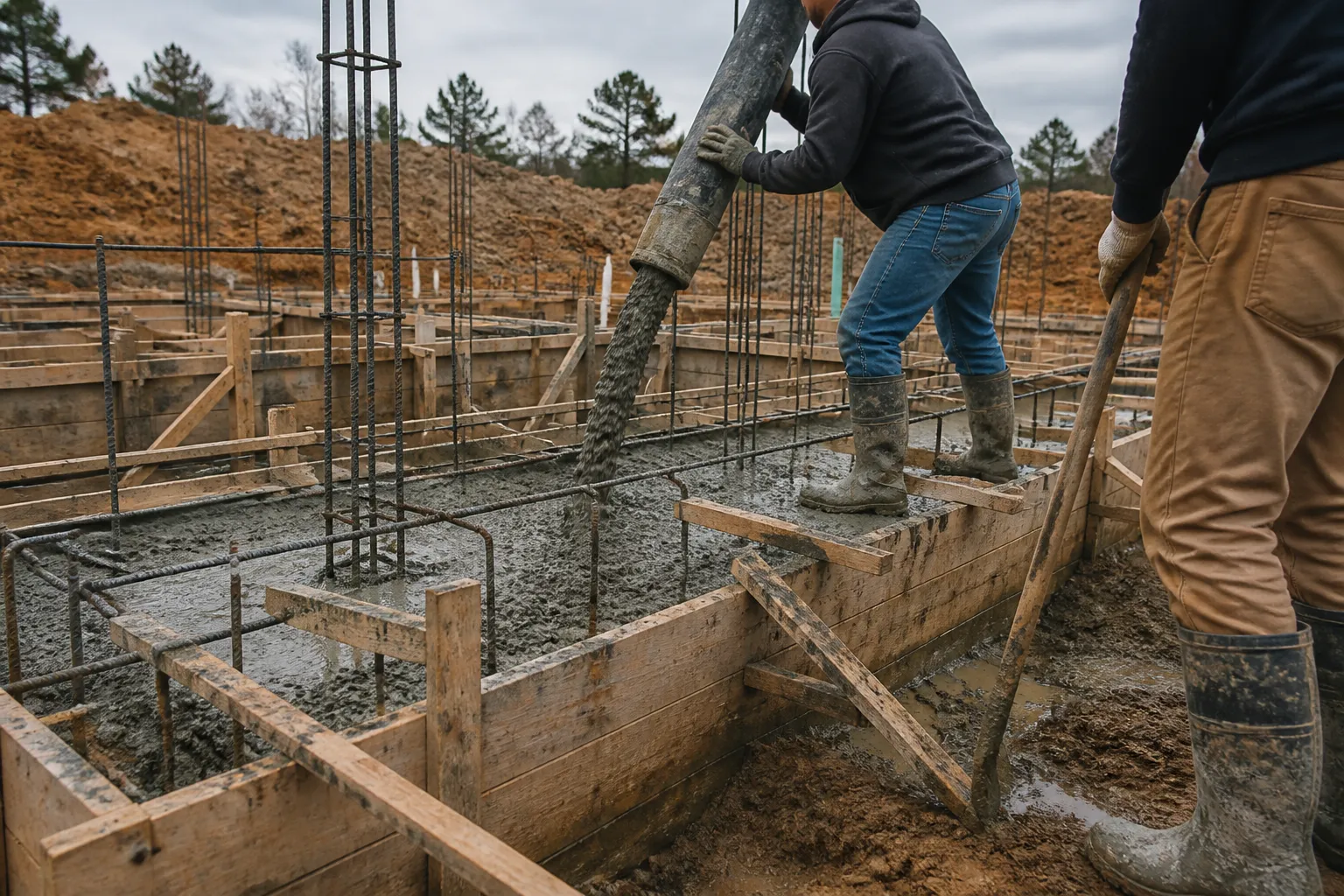
Spartanburg Concrete Contractor pours and repairs concrete in Roebuck, a community of 2,357 people in Spartanburg County. With about 550 people per square mile, Roebuck has more room than the city, so many jobs are long drives, patios, and pads for sheds or campers.
Roebuck grew from 1,725 people in 2000 to 2,357 in 2020. Newer homes often need a first patio or a wider drive. Older ones may have slabs that are starting to crack or pull away from the house.
Most calls are for driveways, patios, and removing old concrete before a new pour. We also build retaining walls where a yard needs to hold back soil.
Send the size, a photo, and what the space is for. We will check the slope and how the truck can reach the spot, then give you a clear plan.
When a slab is too far gone to fix, the old concrete has to come out first. Here is what that usually looks like:
The base step matters most. If the old slab failed because the ground under it washed out, pouring on that same ground will only repeat the problem.
When a yard slopes toward the house or a drive, soil can wash down in heavy rain. A retaining wall holds the soil back and makes a flat area above or below it.
The part of a wall you cannot see matters most. A good wall sits on a solid footing and has a way for water to drain out from behind it. Water that builds up behind a wall pushes on it, and that pressure is a common reason walls lean or crack.
Short walls around a garden bed are simple. Taller walls hold back much more weight and may need a design from an engineer. Your county may also have rules about wall height, so check before you build.
Parking a camper or boat trailer on grass can leave ruts and let the tires sink. A concrete pad gives it a firm, clean place to sit.
If you want power at the pad, plan the conduit before the pour so it can run under the concrete.
A pad also makes it easier to check tires and level the camper before a trip. Once the pad is set, gravel or plants around it can soften the look.
Roebuck is named for Benjamin Roebuck, an officer in the Revolutionary War, according to Wikipedia. It is home to Walnut Grove Plantation, a preserved 18th-century farmhouse. Kate Moore, a daughter of its first owners, was a scout for General Daniel Morgan at the Battle of Cowpens. Smith's Tavern was added to the National Register of Historic Places in 1974.
Homes and small businesses here need practical concrete, such as drives, patios, and walks. A clean cut, a good base, and the right joints help each piece last.
Can you pour a new patio? Yes. Share the size and shape.
Can you remove old concrete first? Yes, when needed.
Can a wall be built next to a driveway? Yes. We plan the footing so it does not undercut the drive.
Why is my old wall leaning? Often it is water pressure behind it or a weak footing. We can look and tell you if it can be fixed.
Get Started
Share a few details about your project, and we will help connect you with the right concrete solution for your home, business, or job site in the Spartanburg area.